

Online Safety
What are the issues?
The internet – on the whole is an inspiring and positive place.
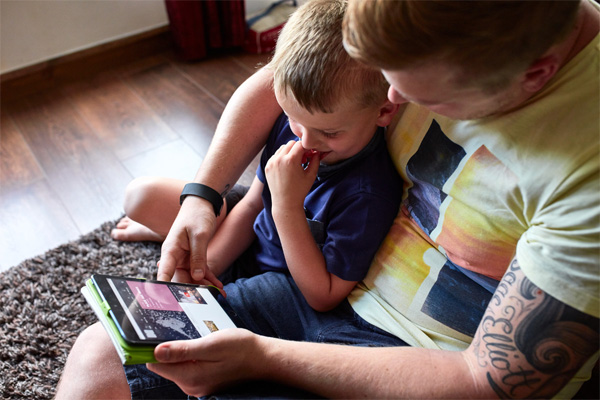
The internet is an amazing resource which enables children and young people to connect, communicate and be creative in a number of different ways, on a range of devices.
However, the internet is always changing, and being able to keep up to date with your children’s use of technology can be a challenge.
You may sometimes feel that your children have better technical skills than you do, however children and young people still need advice and protection when it comes to managing their lives online.
Issues that your child may encounter on the internet will vary depending on their age and online activities.
Resources for parents:
Advice on remote learning
Organisations and websites offering further information and support for online safety:
Play Like Share –
Play Like Share follows the adventures of Sam, Ellie and Alfie as they form a band and enter their school’s Battle of the Bands contest, taking on the mean but ‘cool’ Popcorn Wizards as they go. The three friends learn that while the internet can help, they need to use it wisely and safely.
The aim of the films is to help 8-10 year olds learn how to stay safe online. In particular, the films teach them to spot the early signs of manipulative, pressurising and threatening behaviour by people they might meet online, and develops their confidence to respond safely and get help.

Be Share Aware –
Keep your child safe online
We tell our children it’s good to share – but online it’s different. In fact sometimes sharing online can be dangerous. Being Share Aware will help keep your child safe online.
Watch and share a short film and take a look at some straightforward advice that will untangle the web, and give parents confidence in talking to their children about how to stay safe online.

Governors are very well informed and know their school well. They provide the right level of support and challenge.

Teaching, learning and assessment are good across the school.

The behaviour of pupils is good. Around the school, in the dining hall and on the playground, pupils are well behaved and courteous to each other and adults.

In English, texts are carefully chosen to encourage reflection and understanding difference and diversity.

Purposeful and varied outdoor learning provides the opportunity for pupils to engage in the awe and wonder of the natural world.

Pupils’ development as advocates for social justice is particularly strong and goes beyond regular fundraising.

The teaching of writing is good. Teachers ensure that pupils learn to write in different styles and for different audiences.

Religious education (RE) is well led and taught across school. Pupils have an informed understanding of a range of faiths.

Character development is at the heart of every learning experience.

Strong relationships with families and the community enrich school life.

The school offers a range of opportunities for pupils to participate in a number of afterschool sports clubs and competitive events.

From an early age there is a strong focus on developing curiosity, by asking questions and reflecting on responses.

Leaders are dedicated to make a difference to every pupil and staff member.

Leaders ensure that all curriculum decisions have their vision and associated values of respect, resilience and responsibility at the forefront.

Pupils are taught how to keep themselves safe in a variety of situations, such as when using the internet.

Pupils thrive in an inclusive and nurturing environment.

Leaders and staff are passionate in their drive to ensure every child at Skidby flourishes.

Parents are confident that their children are kept safe and are cared for well.

In phonics lessons, teachers take opportunities to explain that sounds can be made with different groups of letters. This helps pupils to read simple words.

Respect, responsibility, and resilience weave through school life.

Across year groups, pupils who are currently in the school are making good progress in reading, writing and mathematics.

Pupils describe their own spirituality as ‘being themselves, thinking beyond themselves, caring for others, the wider world and beyond’.

Challenged by their learning, pupils are keen to seek justice and fairness for those in society. They talk about ‘how they find a problem and try to sort it out’.

The school’s distinctive Christian vision has brought clear focus and direction to ensure rapid progress as a Church school.

Inspired by the Christian vision, collective worship is highly valued and central to the daily lives of pupils. It encourages pupils to reflect on, and live out the school’s Christian values in their own lives.

Staff communicate with parents well. Parents are appreciative of the information they receive about how well their children are doing and what they are learning.

The school’s work to promote pupils’ personal development and welfare is good.

Teaching assistants have a good understanding of their roles and provide effective support to the pupils they are working with.

A Christian school in a small community, making a big difference.

Throughout the school, pupils are polite, friendly and welcoming. They show respect, both to adults and to each other.

The school’s family ethos creates a calm and welcoming atmosphere.

Pupils are proud of their achievements and embrace learning with enthusiasm.

Teachers successfully plan learning activities that meet the needs and interests of the range of ages and abilities in their classes.

Collective worship is a central part of daily life, it is invitational and inclusive.

Resilience is built through diverse opportunities and managed risks.

A culture of reading inspires a lifelong love for books.

Pupils behave well and have positive attitudes to learning. They respect and listen to one another and work well together.

The curriculum effectively provides time for reflection and spiritual growth.

Driven by their distinctly Christian vision, this school has been on a rapid journey of improvement as a Church school over recent years.

Pupils enjoy lessons because teaching is challenging them to learn more and achieve better.

Pupils understand the conventions of different genres and demonstrate this in their own compositions.

Teachers choose interesting texts to capture pupils’ imagination and support their learning.

Safeguarding is effective and children’s welfare requirements are met. Staff are well trained and vigilant in ensuring that all children are safe.

Staff feel exceptionally supported and valued in their roles.

Younger pupils use punctuation and capital letters accurately, forming sentences with increasing complexity.

Pupils attend school regularly. They are very happy in school and feel safe.

Pupils rise to meet the ambitions of a broad and balanced curriculum.

Aspirations are high and all, including the most able, are challenged. Pupils take pride in their work and delight in seeing their efforts displayed around school.

Parents are positive about the school’s work and the education their children receive.

The breakfast club provides a healthy meal each morning for any pupil who wishes to attend.

High quality displays in all subjects, including RE, are a priority and enable pupils to see the progress they are making.

Pupils challenge injustice and engage in meaningful social action projects beyond fundraising. This has a very positive impact on both their own lives and those of others.

When working together, pupils show good levels of cooperation and help one another willingly. In lessons, they respond well to tasks they have been given and enjoy the work they do.

Pupils make good progress in mathematics. In most classes, teachers plan meaningful and wide-ranging opportunities to solve problems, investigate mathematical ideas and develop mathematical reasoning.


